
What goes into the box?
A buyer looking at a green skincare box might see one material. Lift the tray and there are several decisions underneath it. Here’s what to put on the specification sheet.
See paper and board swatches ↗Cover paper
Write down the paper grade, shade and surface. A subtle grain can look lovely on a large lid and break up a tiny foil line. Ask to see the smallest letter stamped on the actual sheet.
Ask for a labelled swatch and the paper specification.
Board and corrugated liner
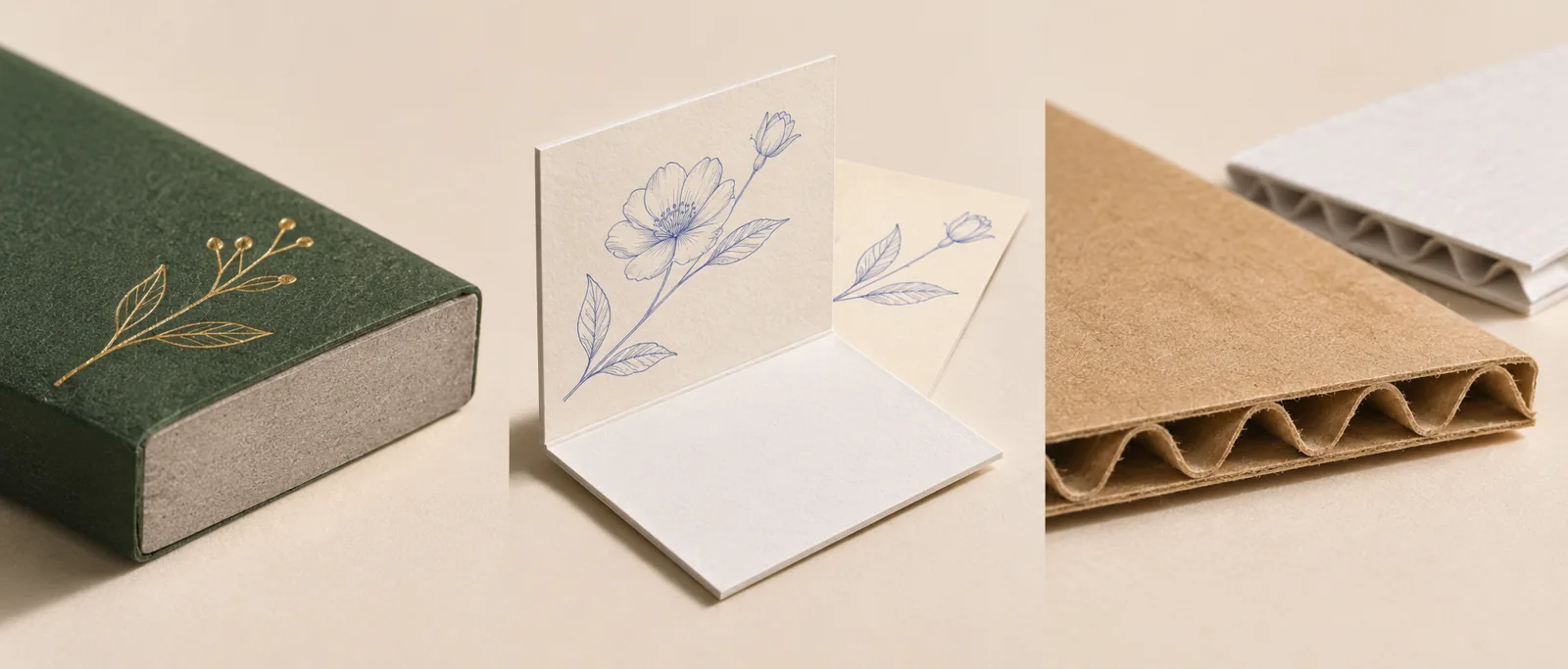
For a rigid lid, specify the covered board and check the finished corner. For a shipper, record the flute, liner and filled weight. A print proof on white paper will look different from ink on brown kraft.
Ask for the quoted board grade and a cut edge from the sample.
Insert
A folded card divider can separate two coffee pouches. A glass jar needs support around its body and space for fingers. Compare a paper-based insert with a lined or foam option using the filled product.
Ask for the insert material and whether the buyer can lift it out in one piece.
Film, foil and varnish
Mark which panels carry film, which carry varnish, and where foil is applied. A small foiled mark and a film covering the whole lid are different specifications.
Ask for a finished swatch and the coverage on each panel.
Magnets, ribbon and glue
Hidden magnets sit under the wrap. A ribbon may be trapped beneath the insert or glued to the board. If a buyer needs parts to come apart after use, try that on the assembled sample and record what stays attached.
Consider a lift-off lid when a magnet-free closure matters.
Requesting material records
Tell us which part and which market the request covers. We can check what documentation is available for the quoted grade or order. For a recycled-content or sourcing requirement, match the document and its scope to the material on your quote.